Where to find penguins in South America
Published date: 1 June 2023

When you think of penguins the first thing you probably imagine is a group of comical birds waddling around on the ice in Antarctica. But South America is actually home to a number of different species and they can be spotted in various colonies up and down the continent, including as far north as the Galápagos Islands.
Here’s a list of what penguins you can see where:

Galápagos penguin
Endemic to the western isles of the Galápagos Islands, this is the only penguin living north of the equator. A cruise around the islands is the most comfortable way to see them, as well as the rest of the Galapagos’ wildlife. However, land-based trips are also possible – just be sure to include Isla Isabela into your itinerary, the most accessible island where these penguins are found.
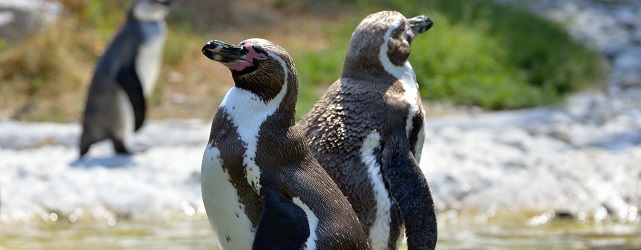
Humboldt penguin
Named after the cold-water current it swims in off the coast of Peru and Chile, the Humboldt penguin is listed as a vulnerable species.
A boat trip to the Ballestas Islands is the best way to see a colony of these penguins, since their proximity to Lima means they can be combined with Machu Picchu and other Peruvian highlights.
Fun fact: Humboldt penguin colonies produce so many droppings that a harvest industry has sprung up around it. Known as guano, the material has been used as fertiliser since the Inca times.
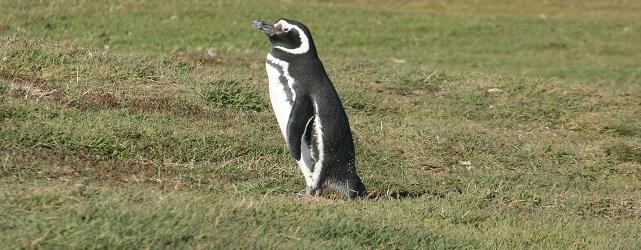
Magellanic penguin
Closely related to the Galápagos and Humboldt penguins, the Magellanic penguin breeds in coastal Argentina, Chile and the Falkland Islands. You can visit large colonies of this bird near Punta Arenas in Chile and Punta Tombo, Peninsula Valdes and the Beagle Channel in Argentina. However, some have been seen as far north as Rio!
Fun fact: On Ilha Grande, Brazil, a Magellanic penguin has formed a friendship with a local man. Named Din Din, he returns every year after spending the summer in Patagonia.
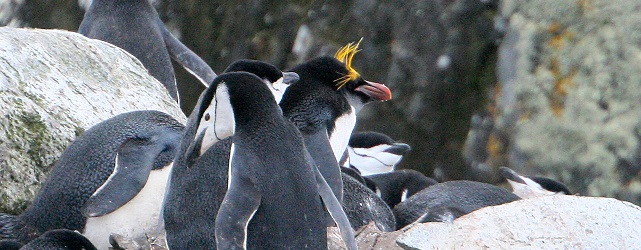
Macaroni penguin
Macaroni was a term used in the 18th century for persons who dressed and acted flamboyantly; so when English sailors came across a penguin with a bright yellow crest, they named it as such. These days they can be found in southern Chile, the Falkland Islands, South Georgia and the Antarctic Peninsula.
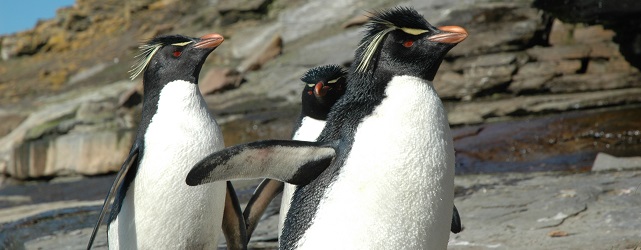
Rockhopper penguin
Another crested penguin, the rockhopper penguin is one of the smallest species of penguin in the world. They can be seen around Cape Horn, the Falklands and South Georgia.

Gentoo penguin
The breeding colonies of gentoo penguins are on ice-free surfaces and can travel quite far inland to nest. They can be seen primarily on the Falkland Islands, South Georgia and in the Antarctic Peninsula. A small number also live in the Beagle Channel near Ushuaia.
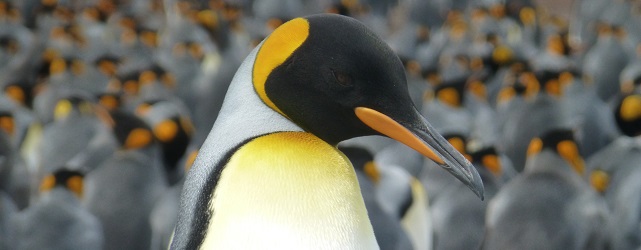
King penguin
The king penguin is the second largest species of penguin in the world and can be seen in Tierra del Fuego, the Falkland Islands and South Georgia.
Fun fact: Sir Nils Olav is a king penguin at Edinburgh Zoo who has received a knighthood and holds the rank of Brigadier in the Norwegian Kings’ Guard.
Only found in Antarctica:
Patagonia’s proximity to the Antarctic Peninsula makes it a popular launchpad for Antarctic cruises,

Adélie penguin
The Adélie penguin lives only along the Antarctic coast and is named after the wife of the French explorer who discovered these penguins in 1840.
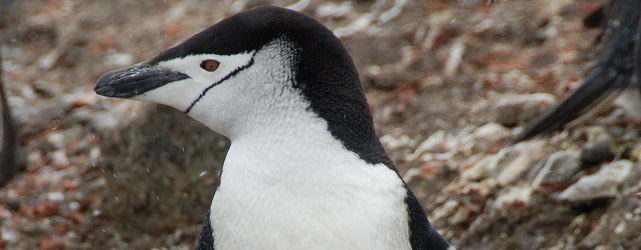
Chinstrap penguin
Its name derives from the black line which crosses its chin making it look as though it is wearing a hat. Easily identifiable, it can be seen in Antarctica, the Falkland Islands and South Georgia.
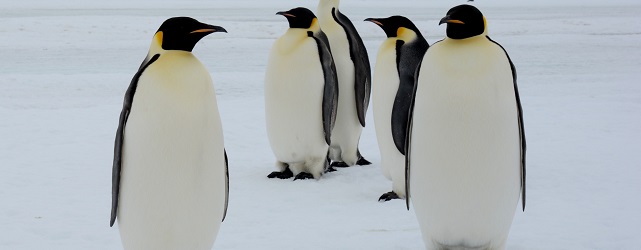
Emperor penguin
The largest penguin on earth, the emperor penguin is endemic to Antarctica.This penguin species is tough: it will trek between 50 and 120km to breeding colonies during the Antarctic winter, and incubate its eggs during this harsh period.
Take a look at these excursions and holidays to find out how you can see these penguins with Journey Latin America:
Wildlife watching in Antarctica
Antarctica: In search of the Emperor penguin
Visit a penguin colony
Visit Chiloe’s penguins